Three Oaks House
Type: Residential - New Construction
Program: Single-Family Home
Location: Three Oaks, Michigan
Construction: Van Overberghe's Construction
Status: Completed 2026
Brief: New 3,800 SF Single-Family Residence with Guest House and Pool
Site
Concept Sketch
Site Plan
Elevation
Section

Organization Diagram
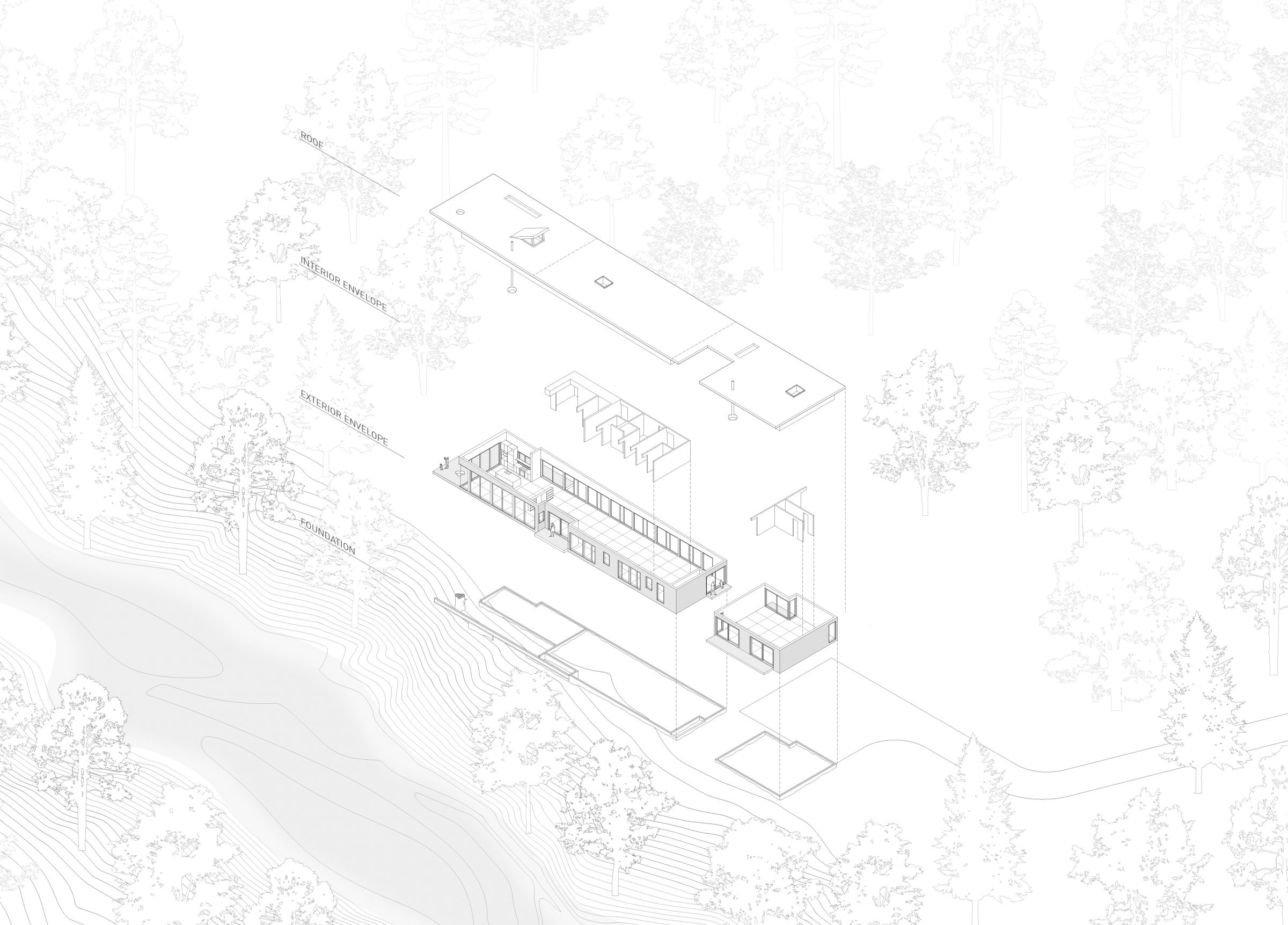
Floor Plan

Design Process
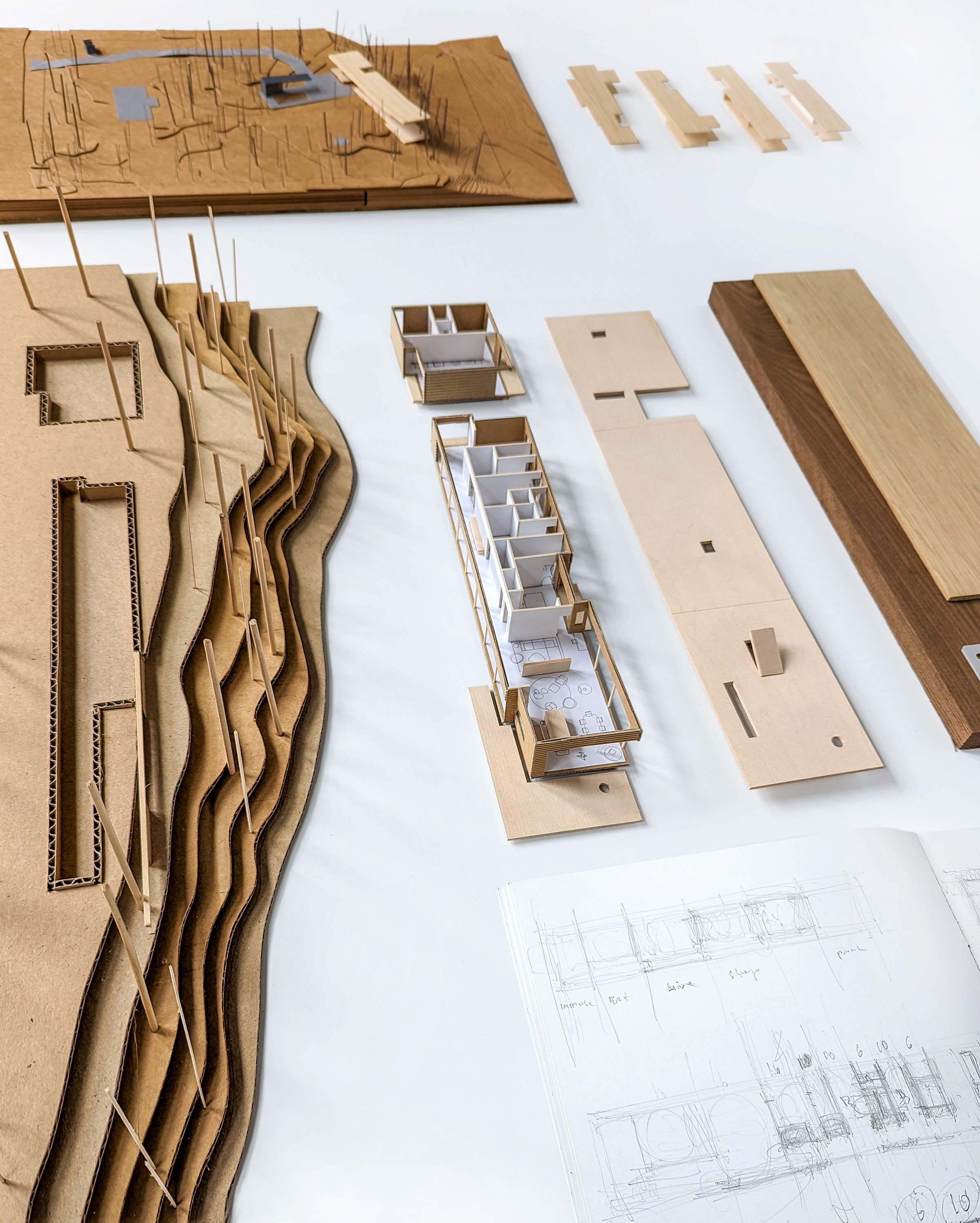
Building Model
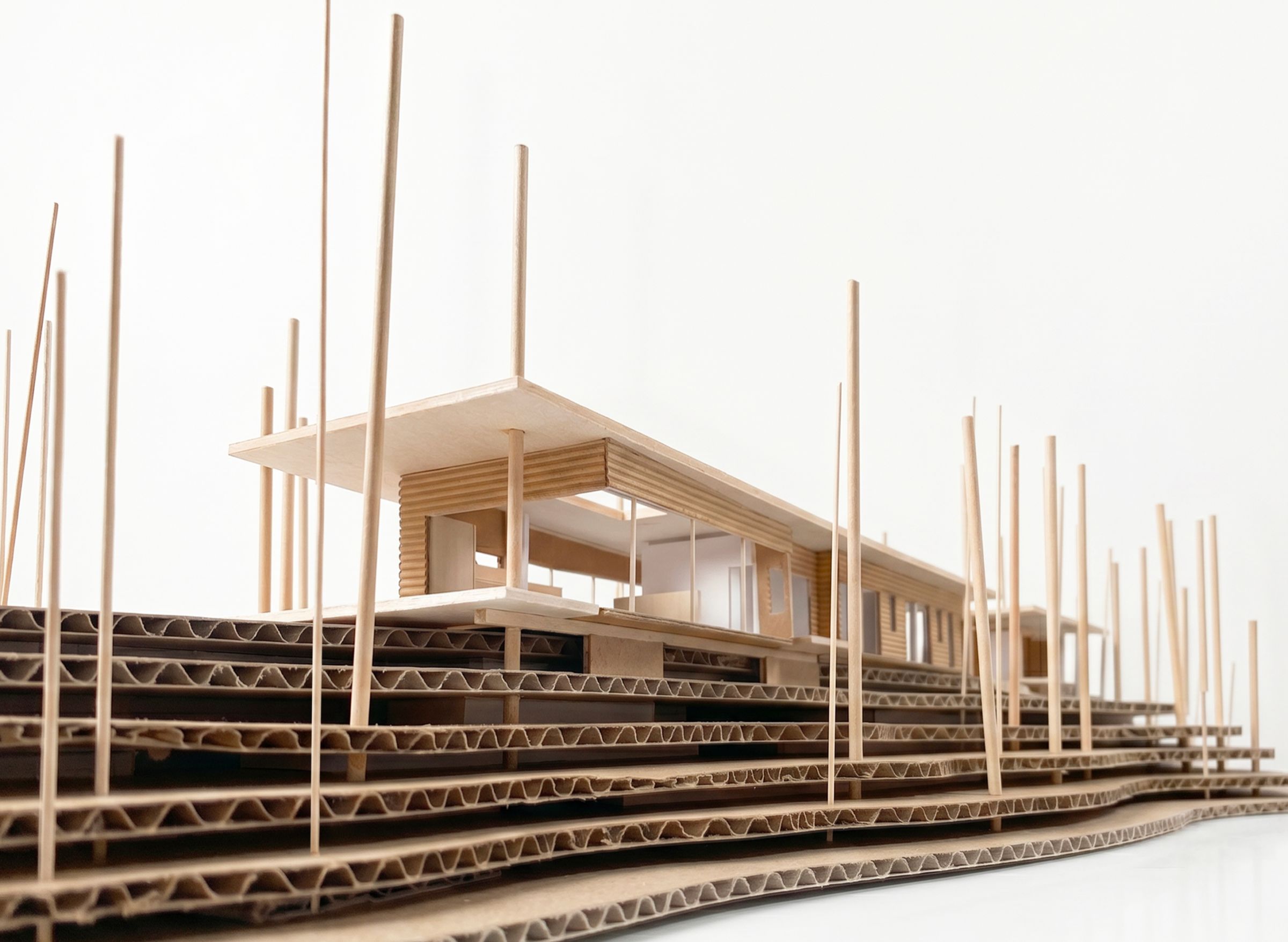
Elevation
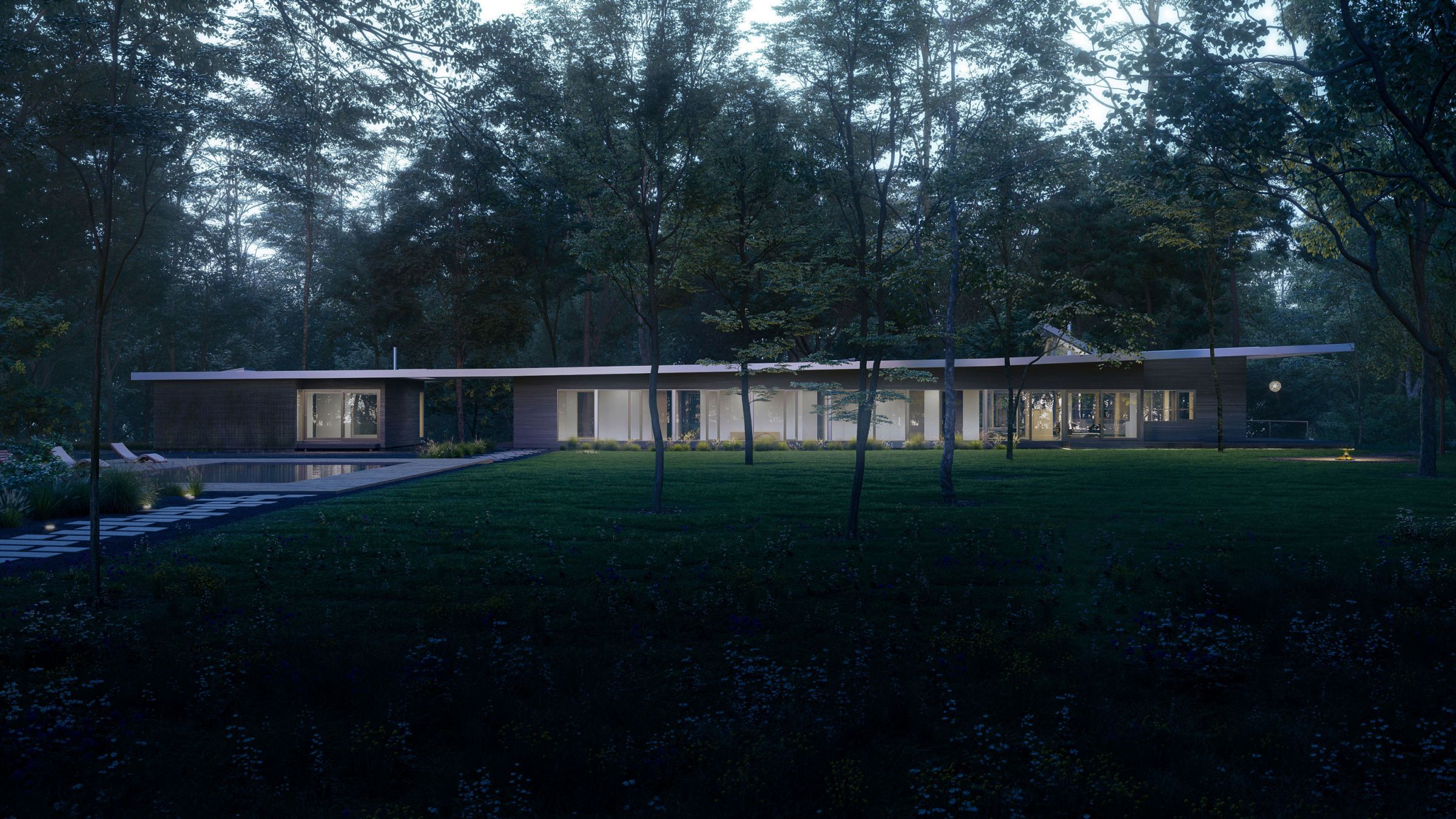
Roof Detail
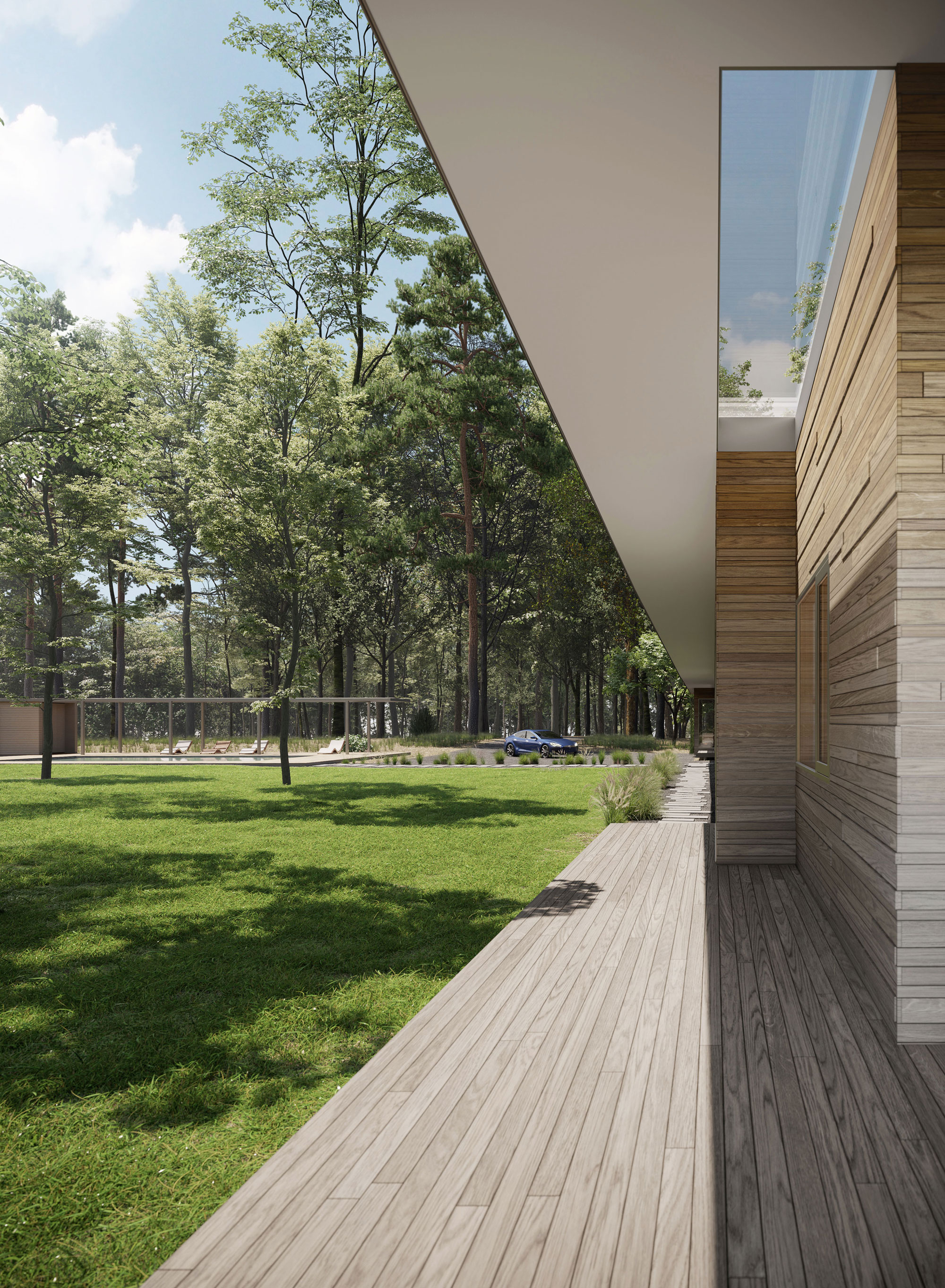
Gallery
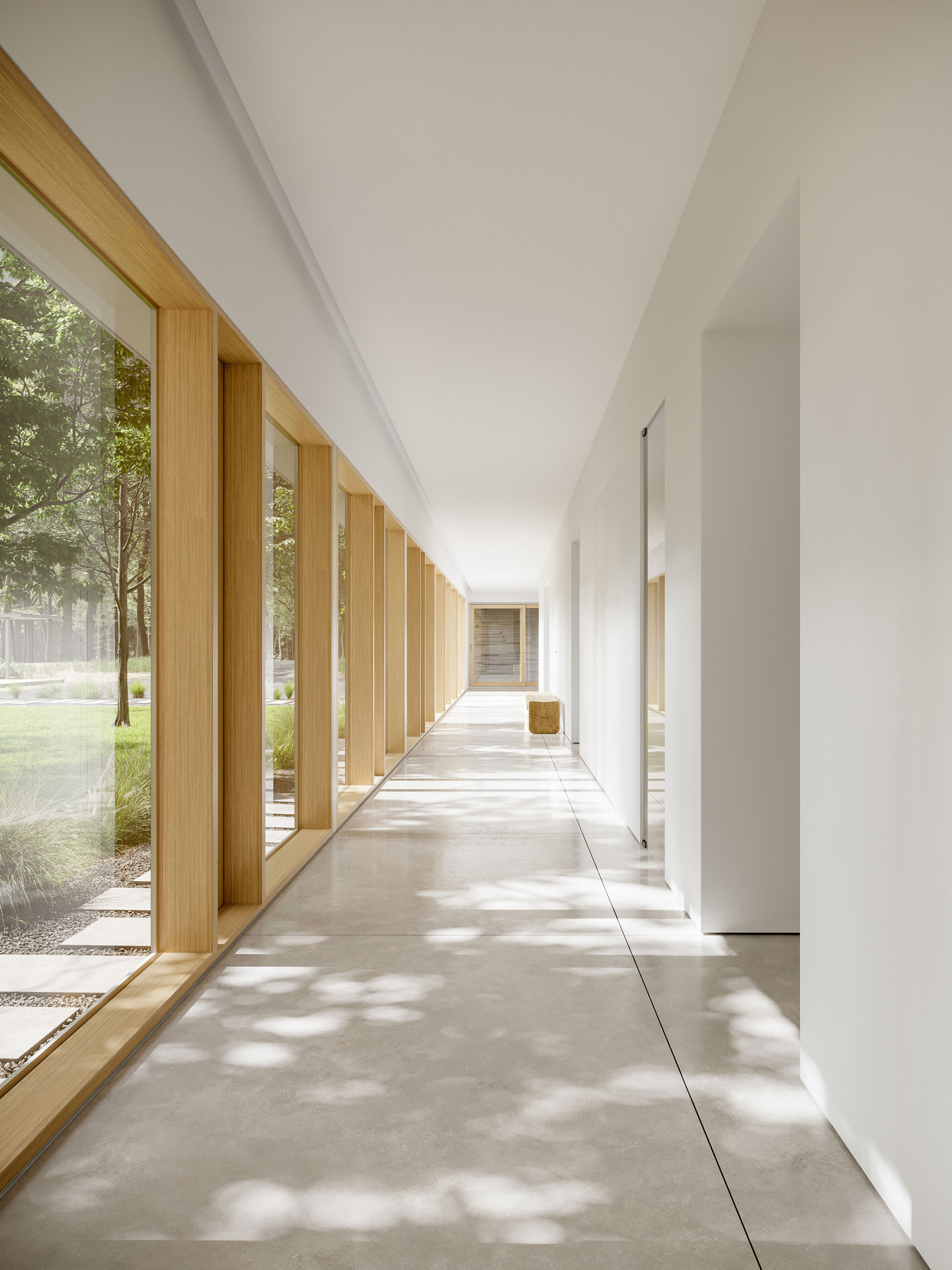
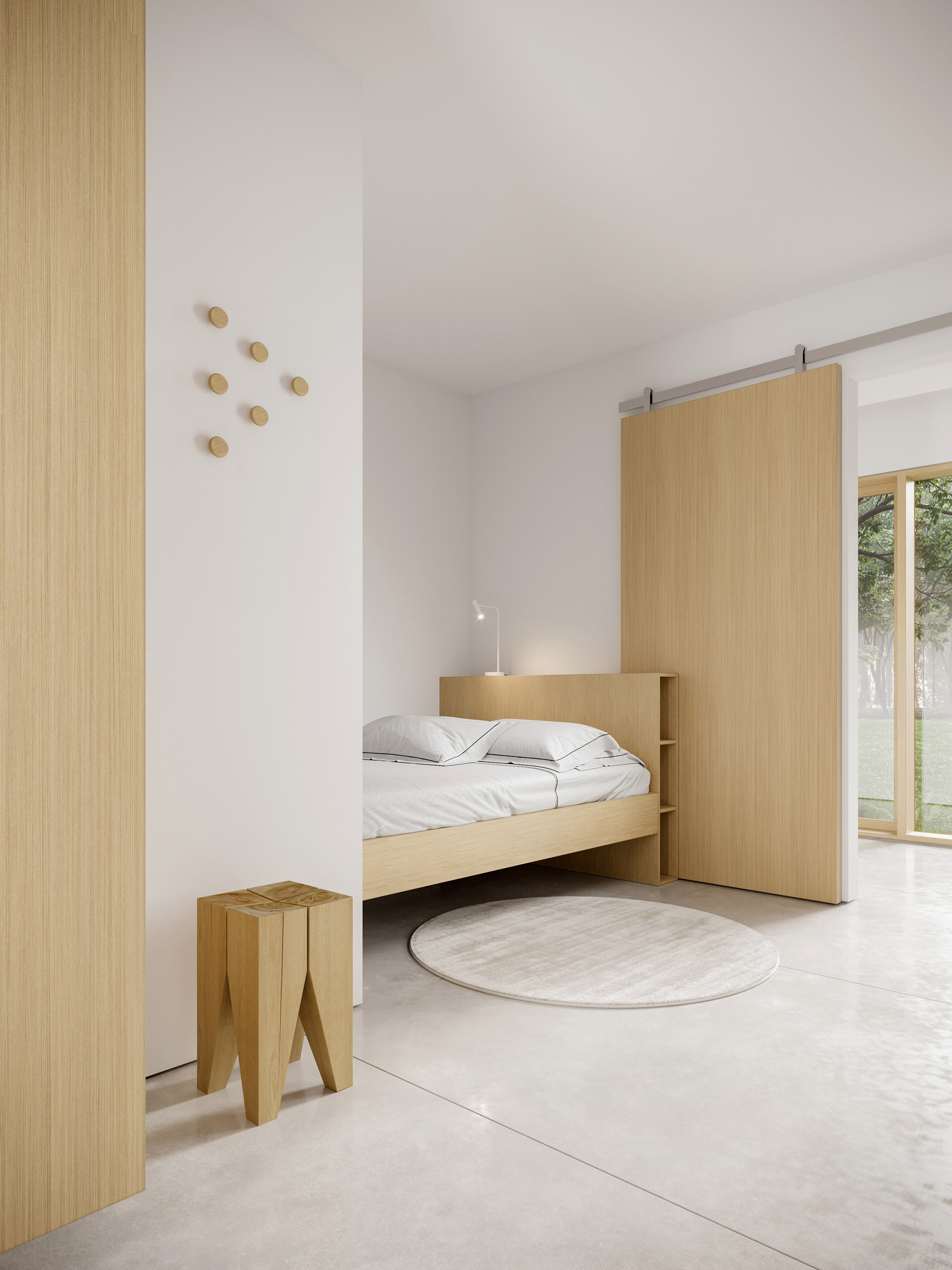
Sleeping

Sleeping Niche
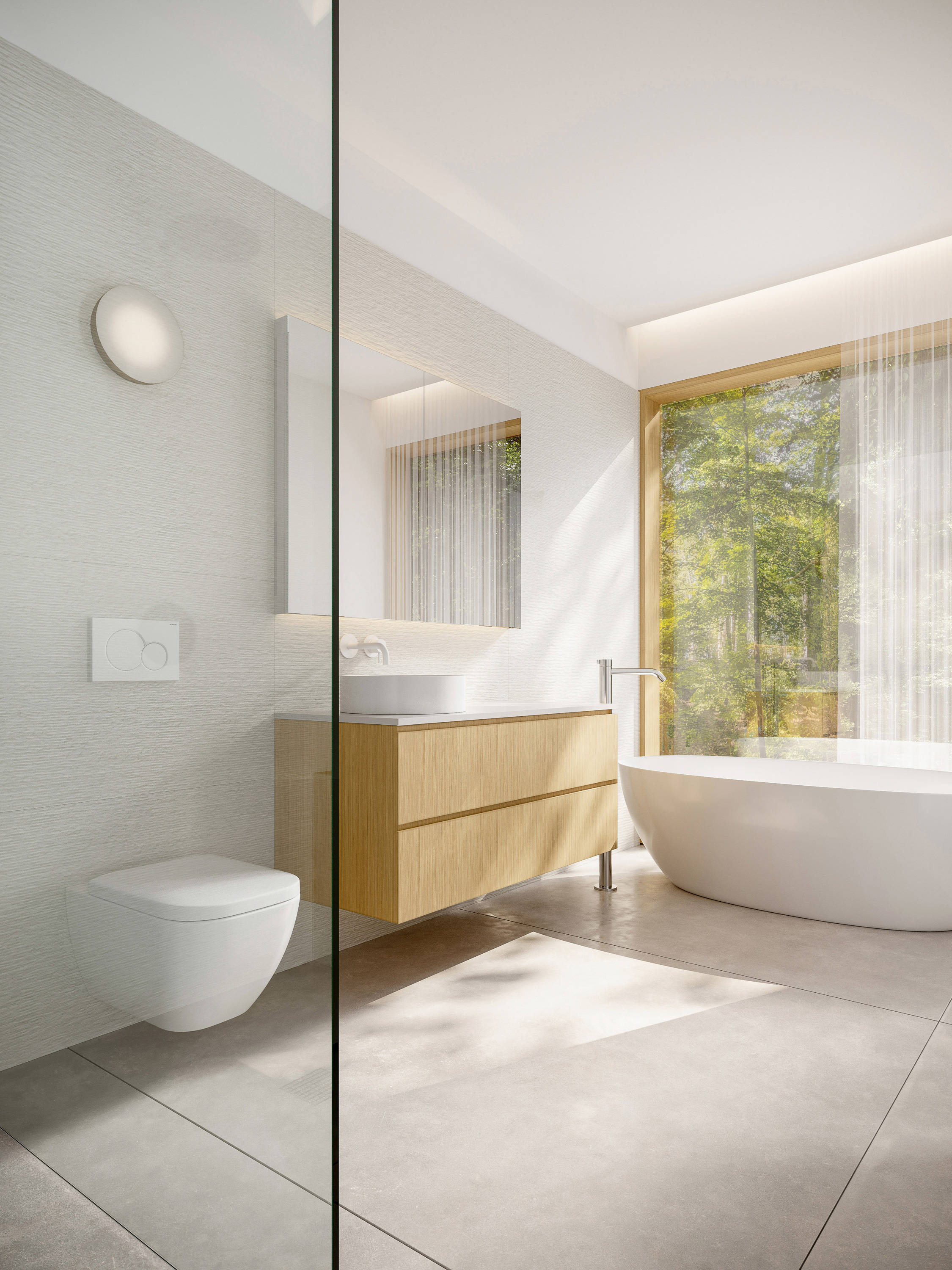
Bathroom
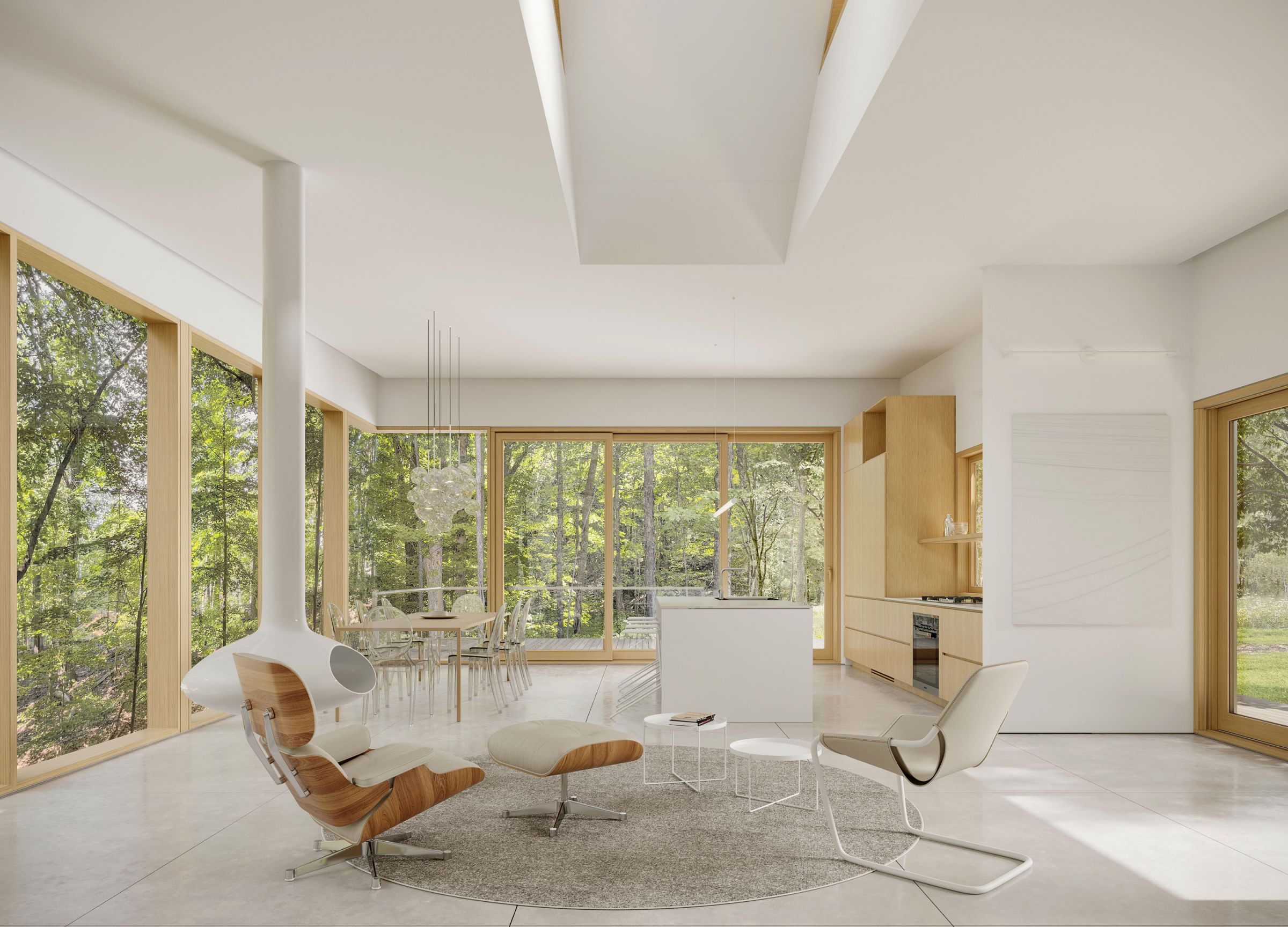
Living
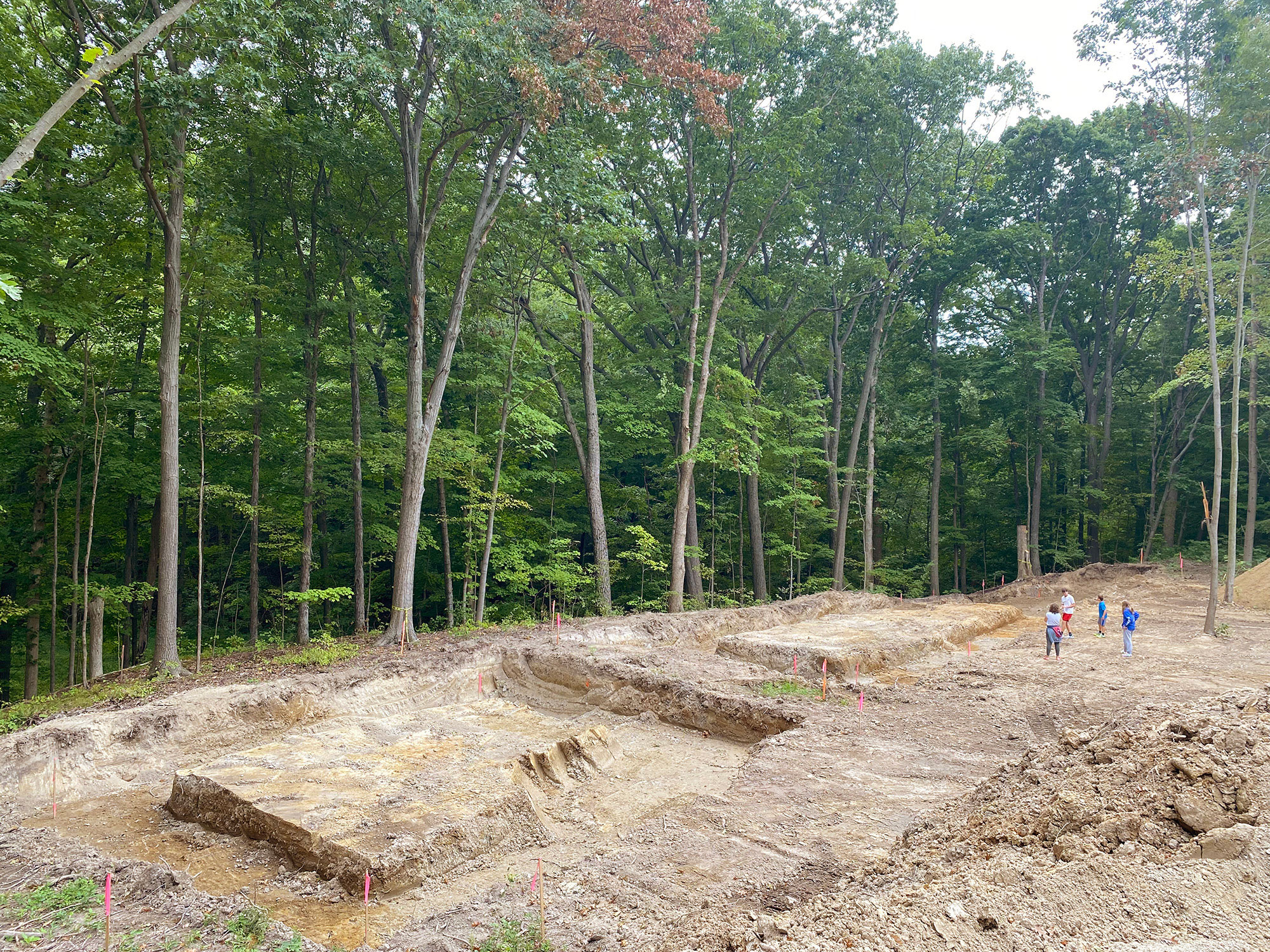
Excavation

Excavation
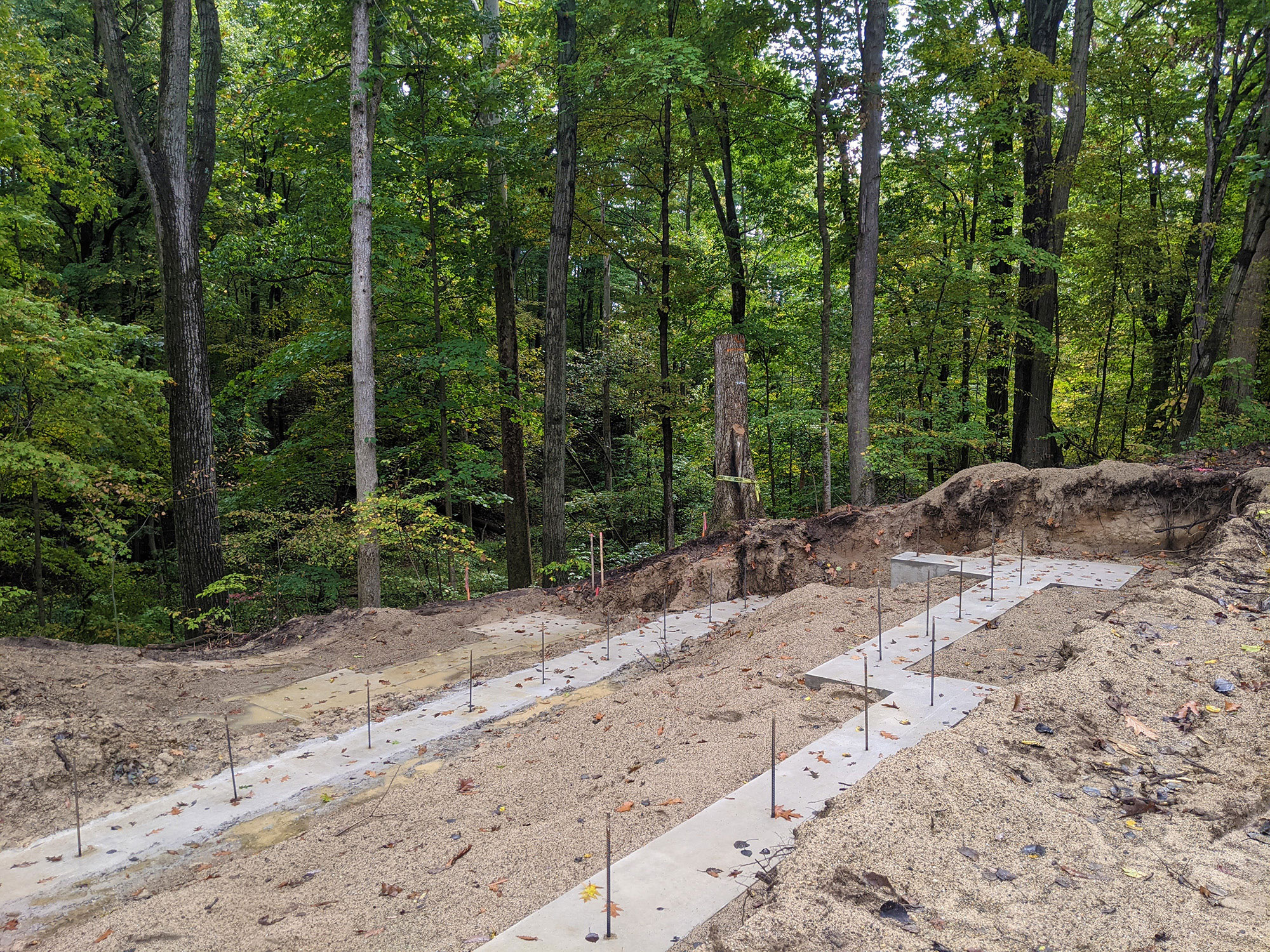
Foundations
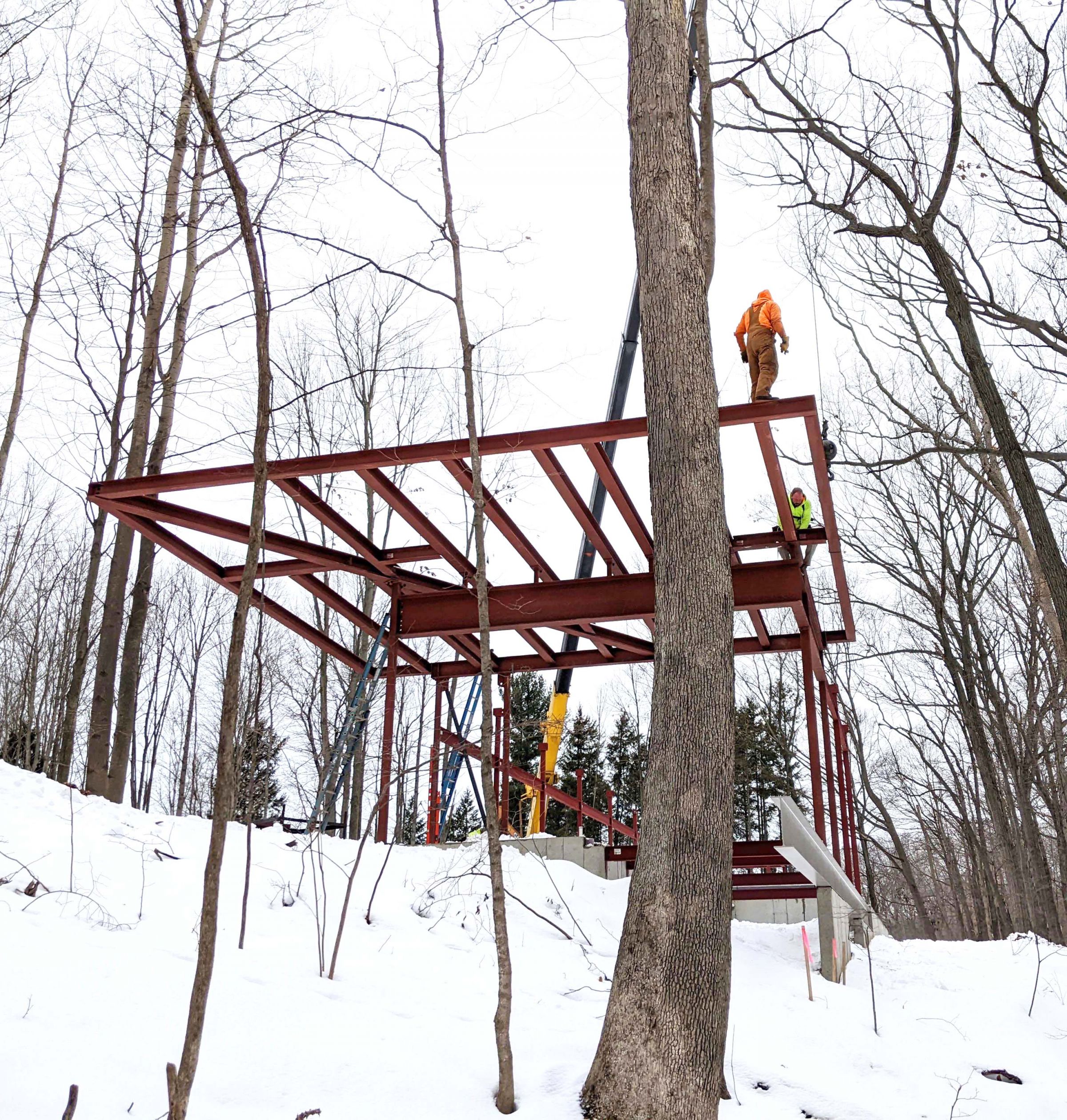
Steel
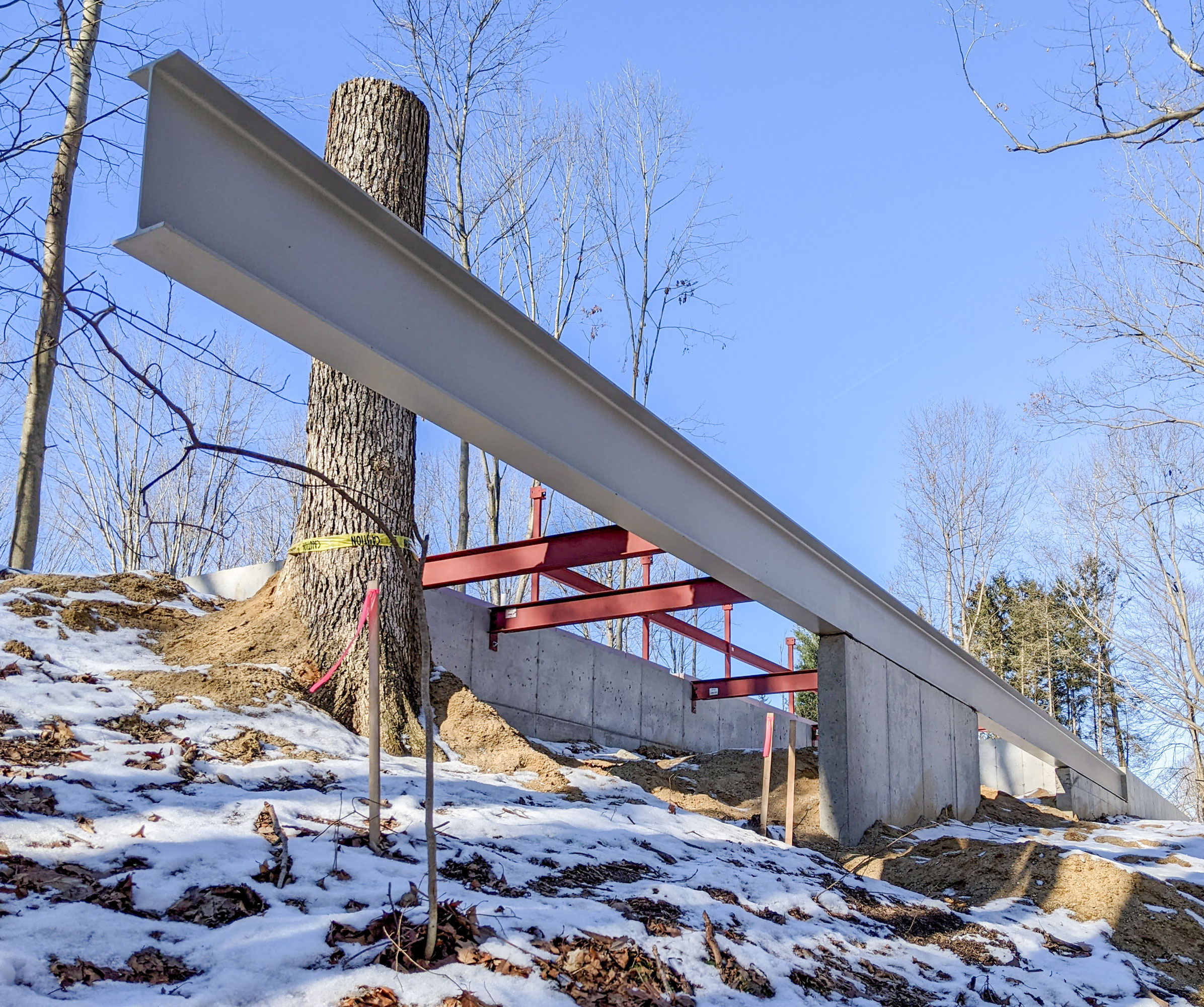
Steel

Steel
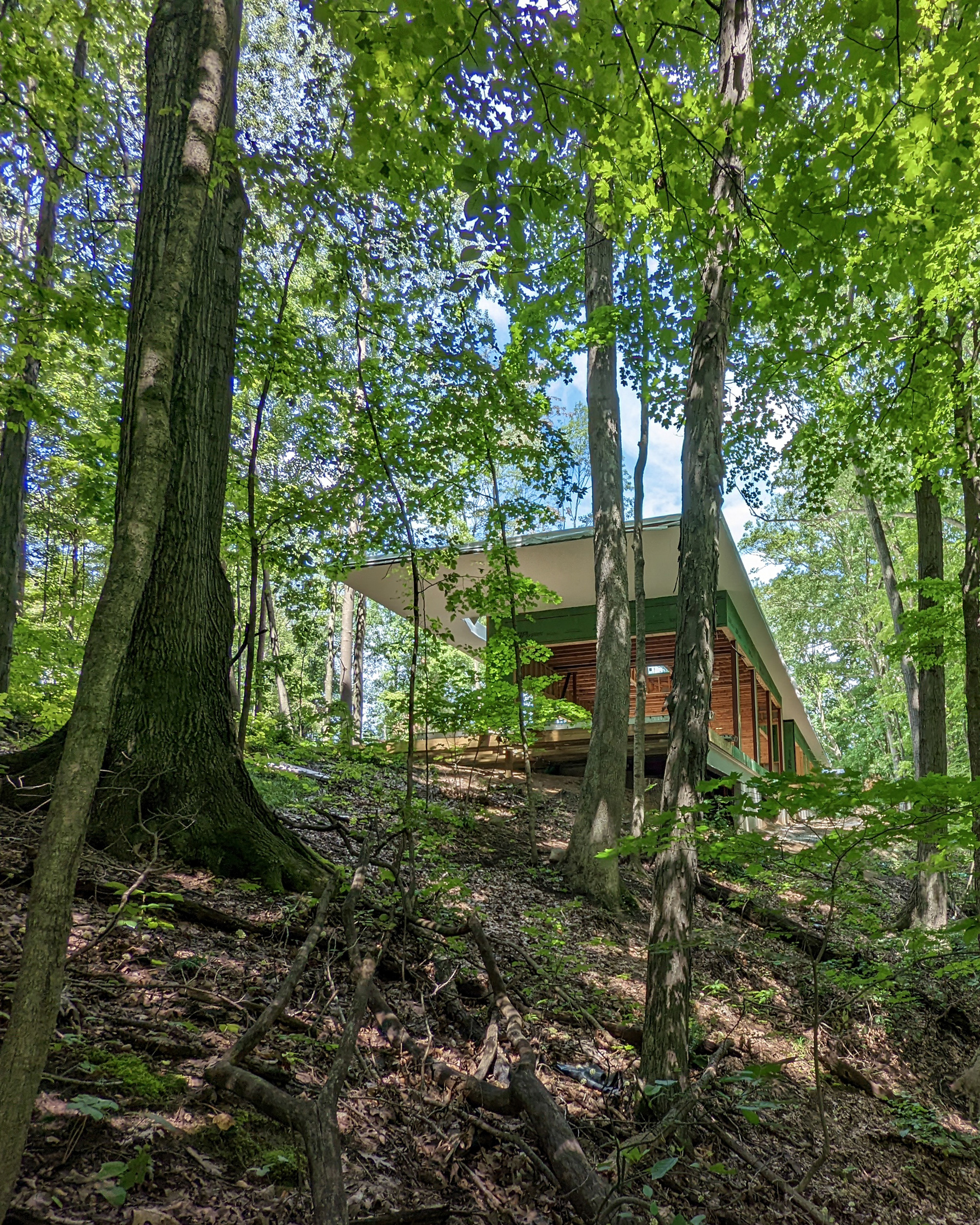
Framing
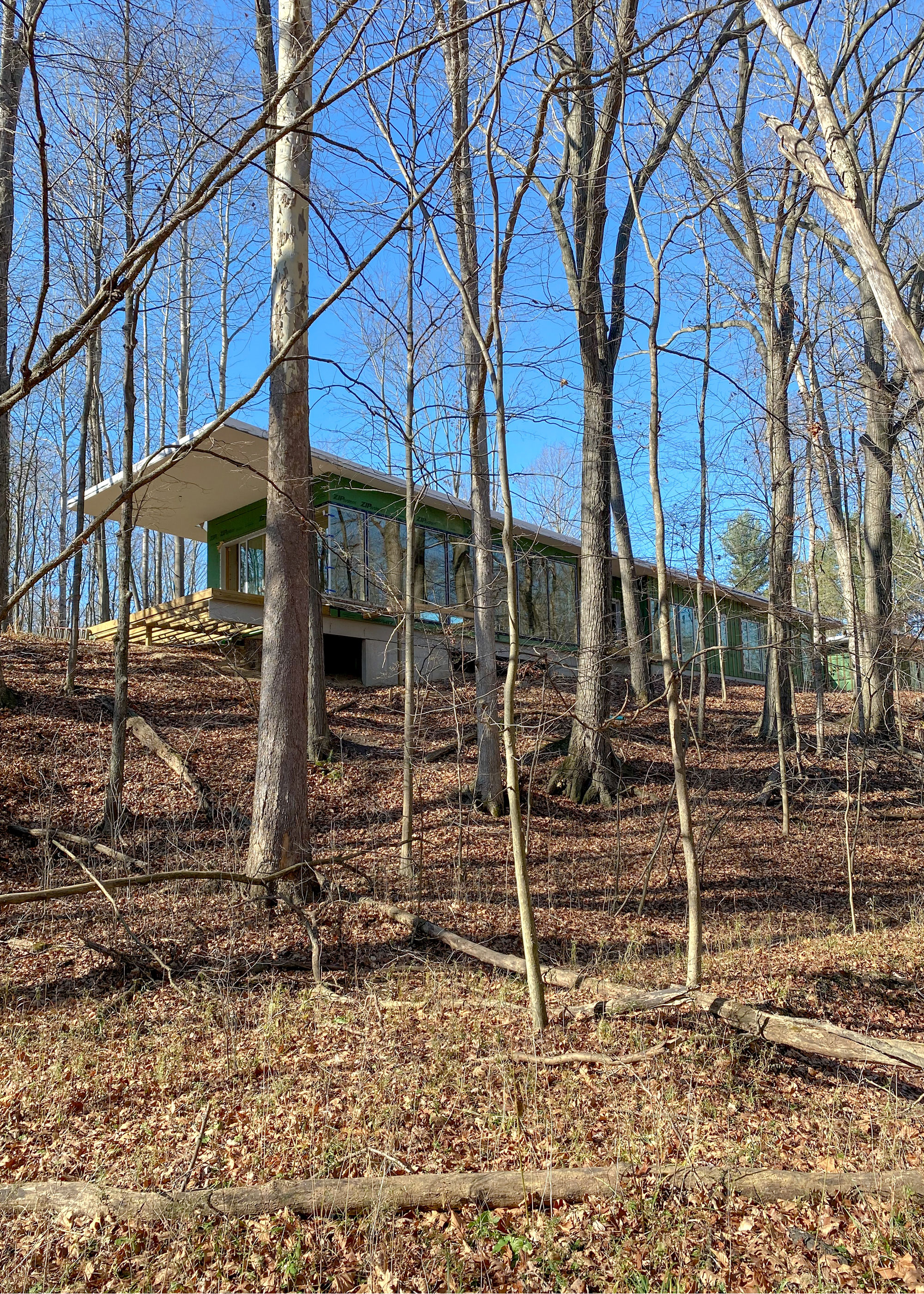
Cladding
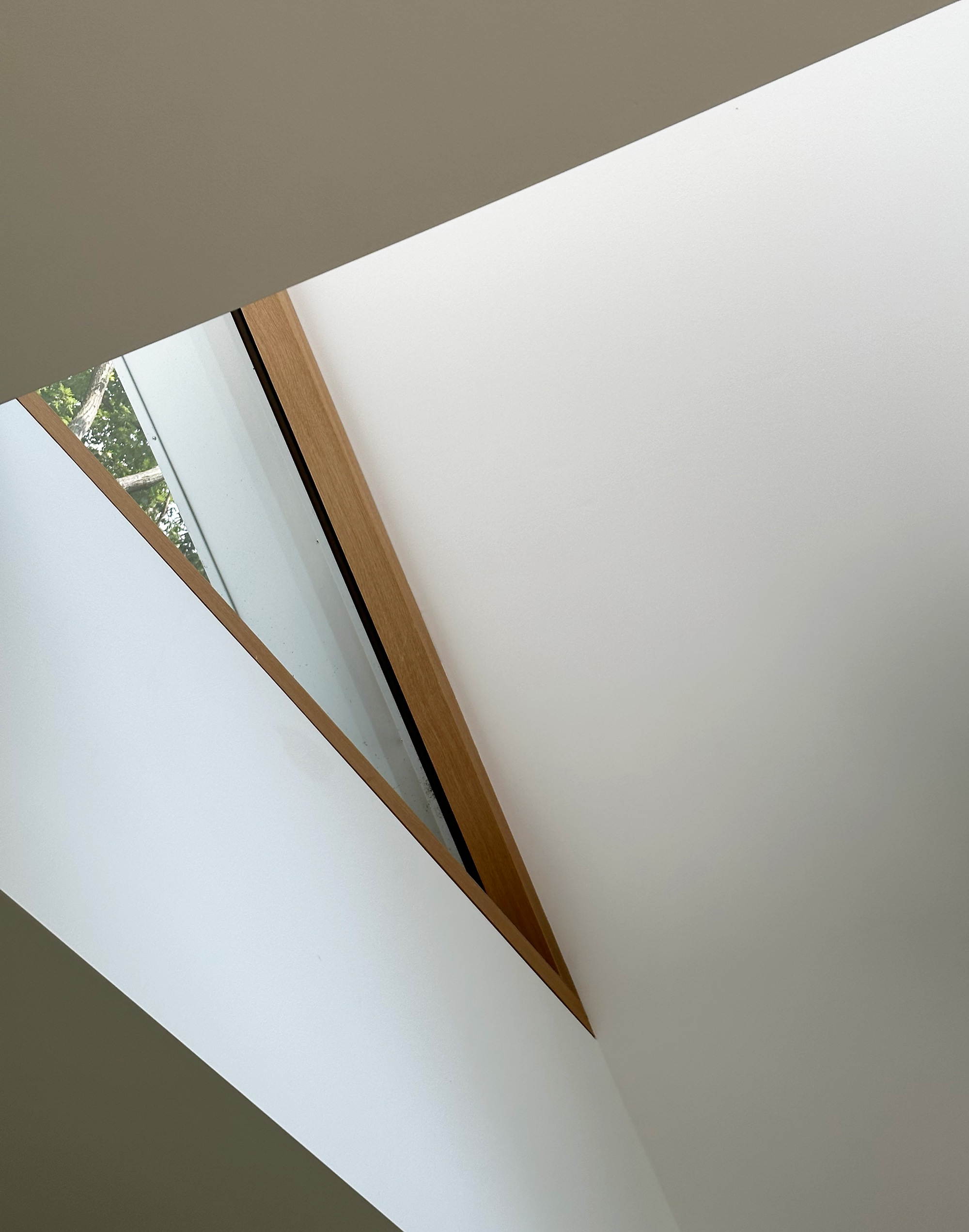
Skylight Detail
Experiencing Trees

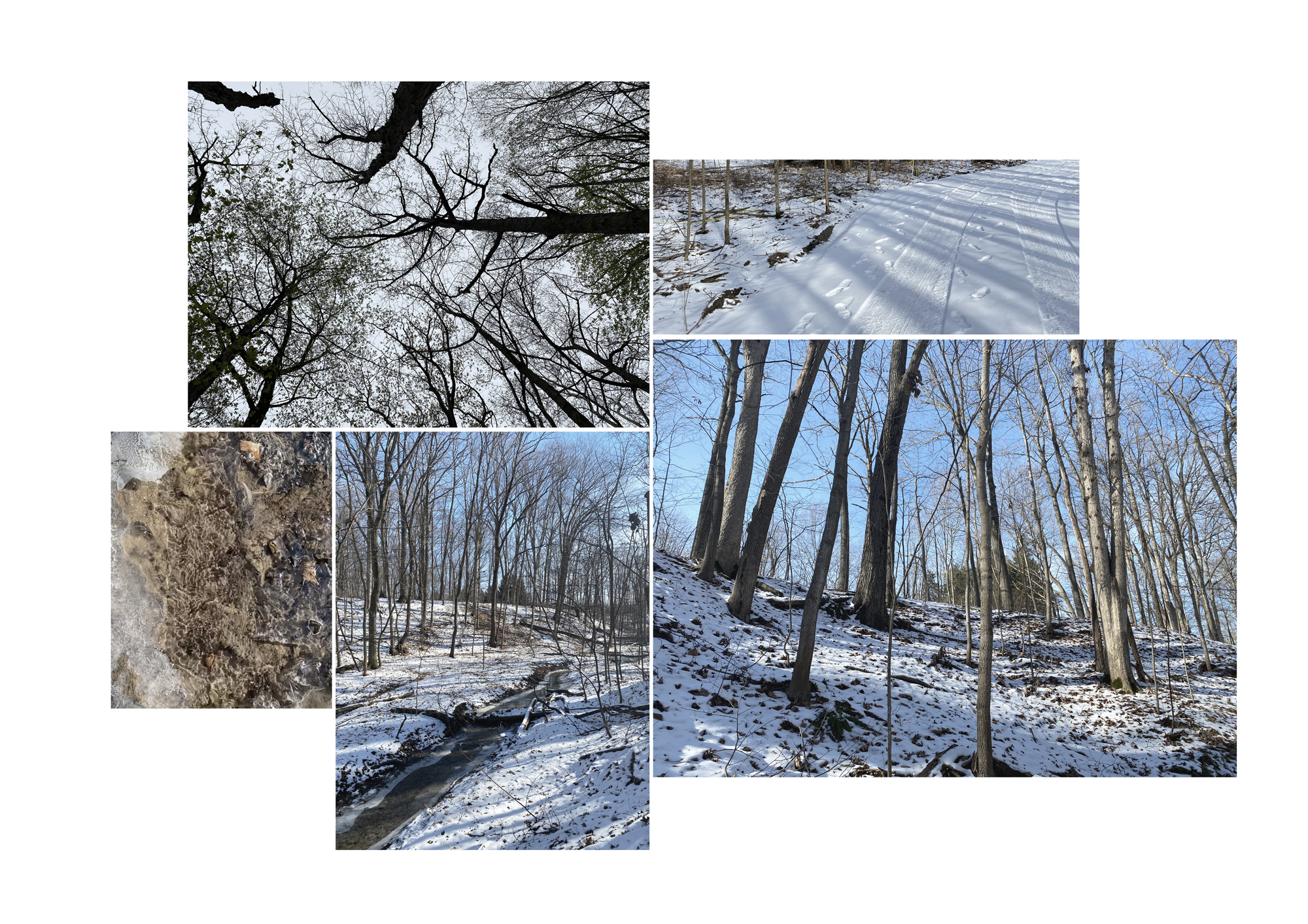
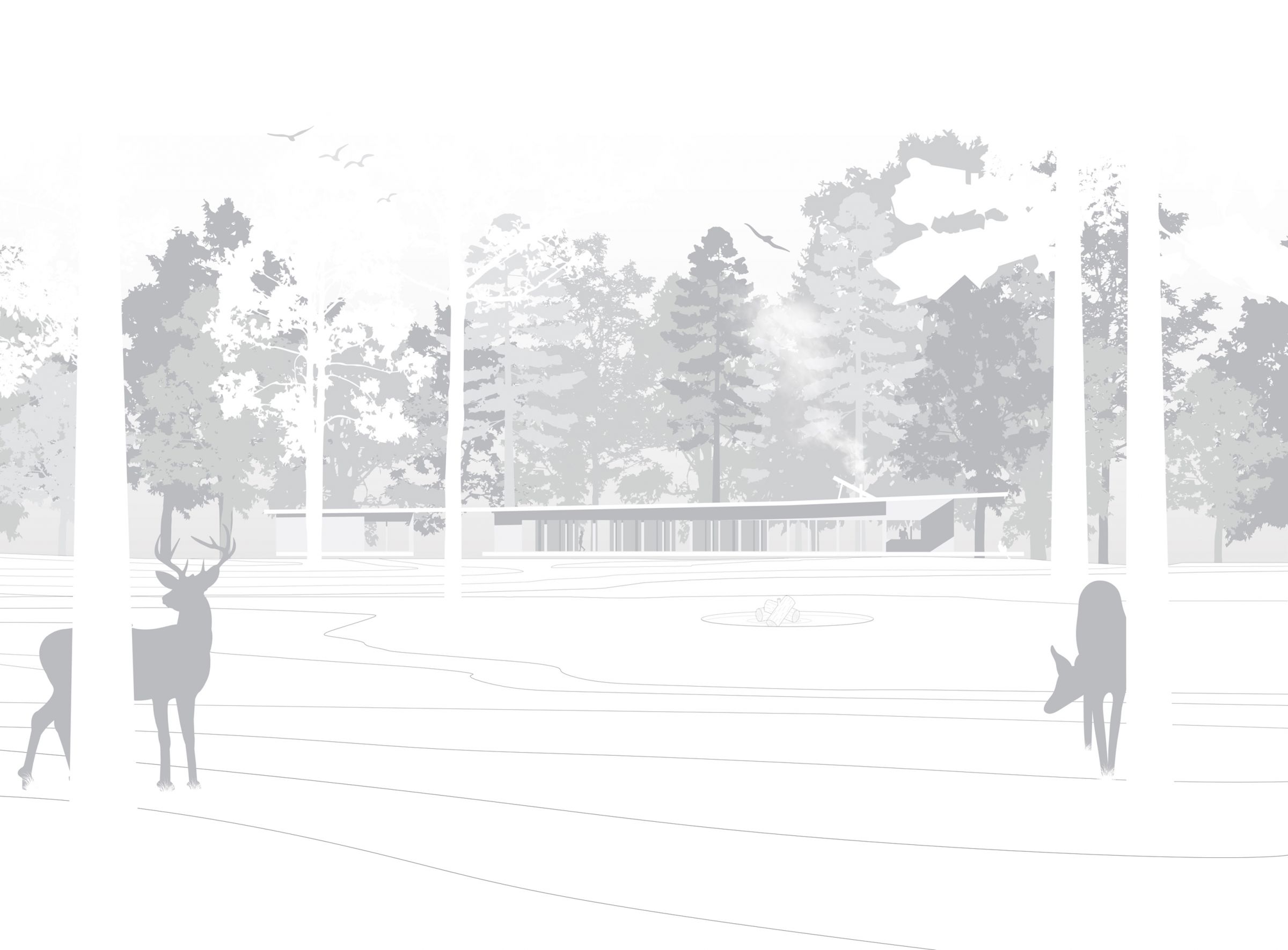
Carefully positioned along the sloped terrain, Three Oaks house mediates the threshold between clearing and forest. Hovering along the edge of the ravine amongst densely growing oaks, maples, and poplars, the project explores how architecture can heighten one’s awareness of place, seasonality, light, and time.
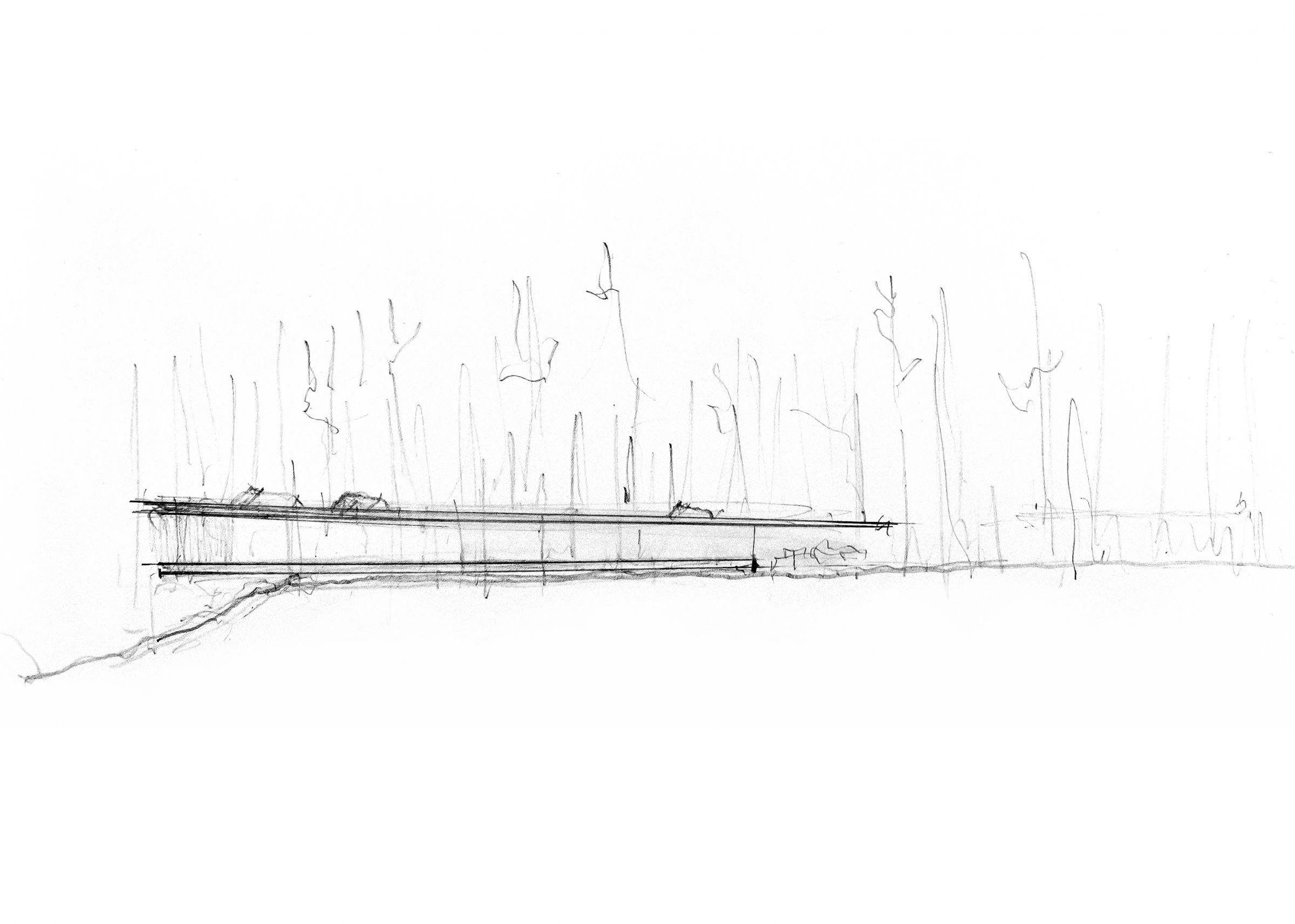
The commission began with the owners’ desire for a transparent house inspired by the clarity and discipline of Mies van der Rohe’s Farnsworth House, a retreat from the noise and intensity of the city. Rather than directly pursuing the precedent formally, the project draws from the experiential intentions of the iconic house: spatial clarity, lightness, precision, craftsmanship, and atmosphere. Conceived as a singular linear gesture within the landscape this home becomes an instrument for engaging the ravine, the trees, filtered light, sounds of rain and wind, fallen snow, and the ephemeral qualities that continuously transform the southwest Michigan landscape throughout the seasons.
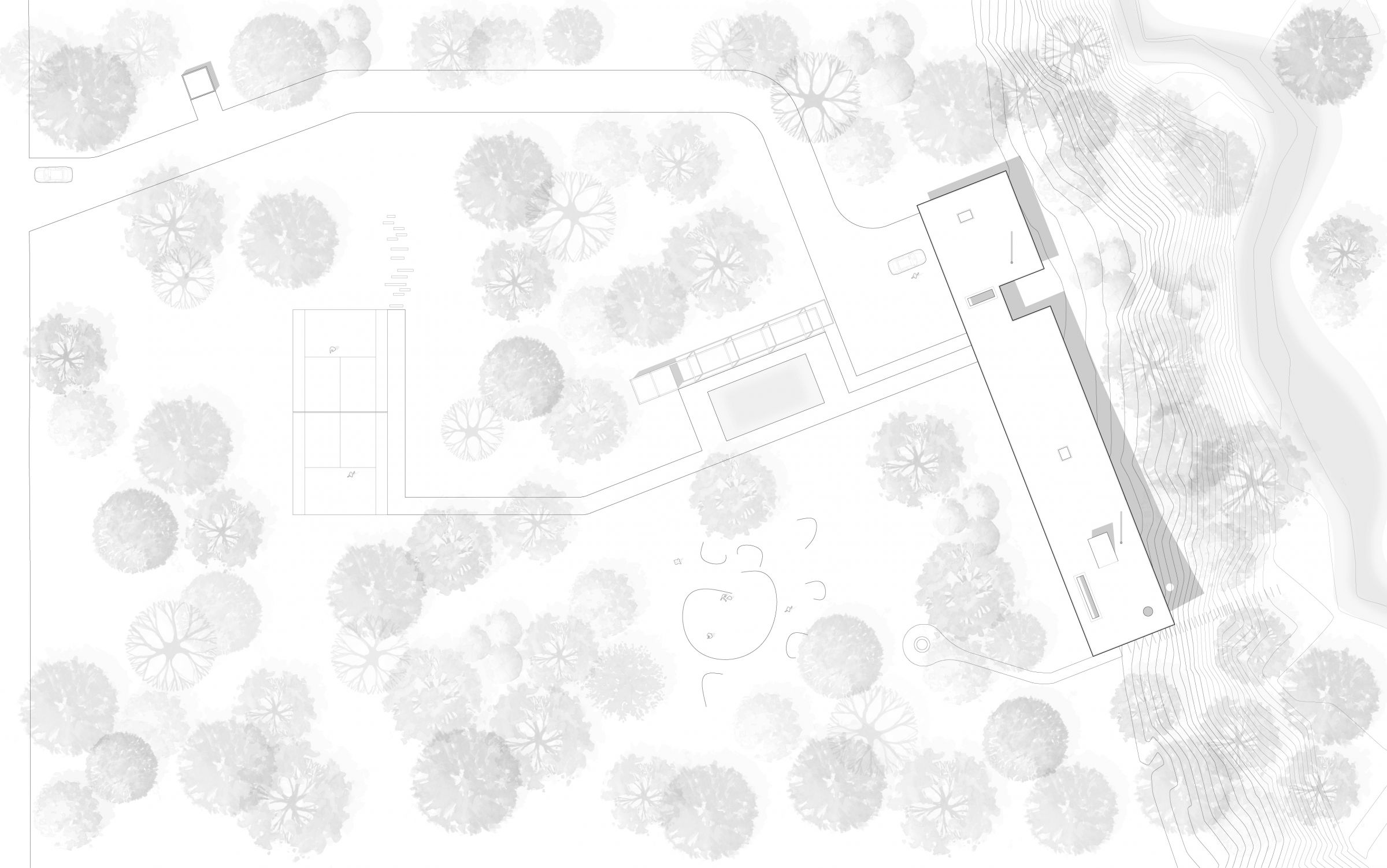
Organized on a rigorous 5-foot by 6-foot structural and spatial grid, the house balances precision with openness. The plan stretches horizontally across the site, allowing nearly every space to establish a direct visual relationship with the woods and the ravine. Oversized glazed openings create continuous sight-lines through the house and outward into the landscape, reinforcing transparency not as aesthetic effect, but as spatial and atmospheric continuity. The proportion and spacing of the window mullions establish a subtle dialogue with the vertical rhythm of the surrounding tree trunks, allowing, shadows, and landscape to visually blur across the interiors throughout the day.
An enlarged circulation gallery wraps the private sleeping quarters and functions simultaneously as a connective exhibition space for the owners’ evolving art collection. This widened threshold transforms movement through the house into a curated spatial sequence where framed views of landscape, artwork, shadows, and light continuously intersect.
The primary living space projects over the ravine edge, creating the sensation of hovering amongst the trees. Here, the architecture deliberately engages all four orientations, allowing the interiors to register the changing qualities of daylight and atmosphere from morning to evening. Light becomes both atmospheric and measurable, reinforcing the occupants’ awareness of place and their immersion within nature.
The exterior is clad in thermally modified pine whose varied depth and subtle irregularity recall the texture and rhythm of surrounding tree bark. Above, the roof-line shifts through a series of carefully calibrated slopes corresponding to changes in program and spatial hierarchy. The lowest point occurs at the open carport, separating the guest house from the primary dwelling thus creating a framed visual passage through the architecture toward the forest beyond.
As the landscape continues to mature and the exterior cladding gradually weathers, the house is intended to become increasingly inseparable from its surroundings. The result is a dwelling that transforms a familiar modernist aspiration for transparency into a deeply contextual and sensory experience: a house not simply for viewing nature, but for inhabiting it.